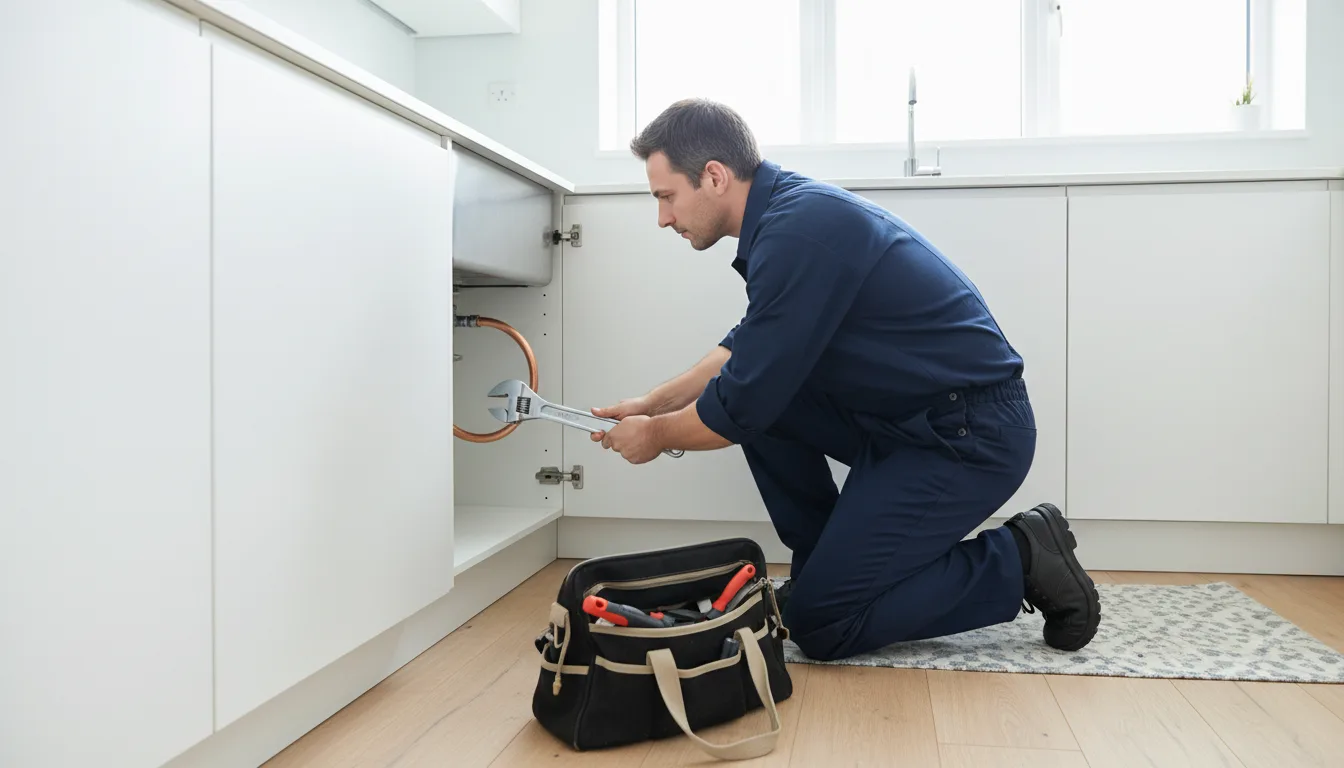
Repiping replaces the supply lines that carry water through the house. It makes sense when the existing pipes are past their service life or failing in more than one place.
Signs it is time
- Galvanized steel pipe: common in homes built before the 1960s. It rusts from the inside, choking flow and turning water brown.
- Polybutylene: gray plastic pipe used from the late 1970s to mid-1990s, known for sudden failures.
- Repeated pinhole leaks in copper, often a sign of aggressive water chemistry.
- Low pressure through the whole house
- Discolored or metallic-tasting water
PEX or copper?
PEX is flexible, resists freeze cracking better than rigid pipe and needs fewer fittings, which makes for a faster job with fewer wall openings. Copper is rigid, long-lasting and handles high heat. The plumber recommends one based on your water chemistry, budget and how the house is built.
A typical whole-house repipe takes a few days. Water is usually restored at the end of each work day.